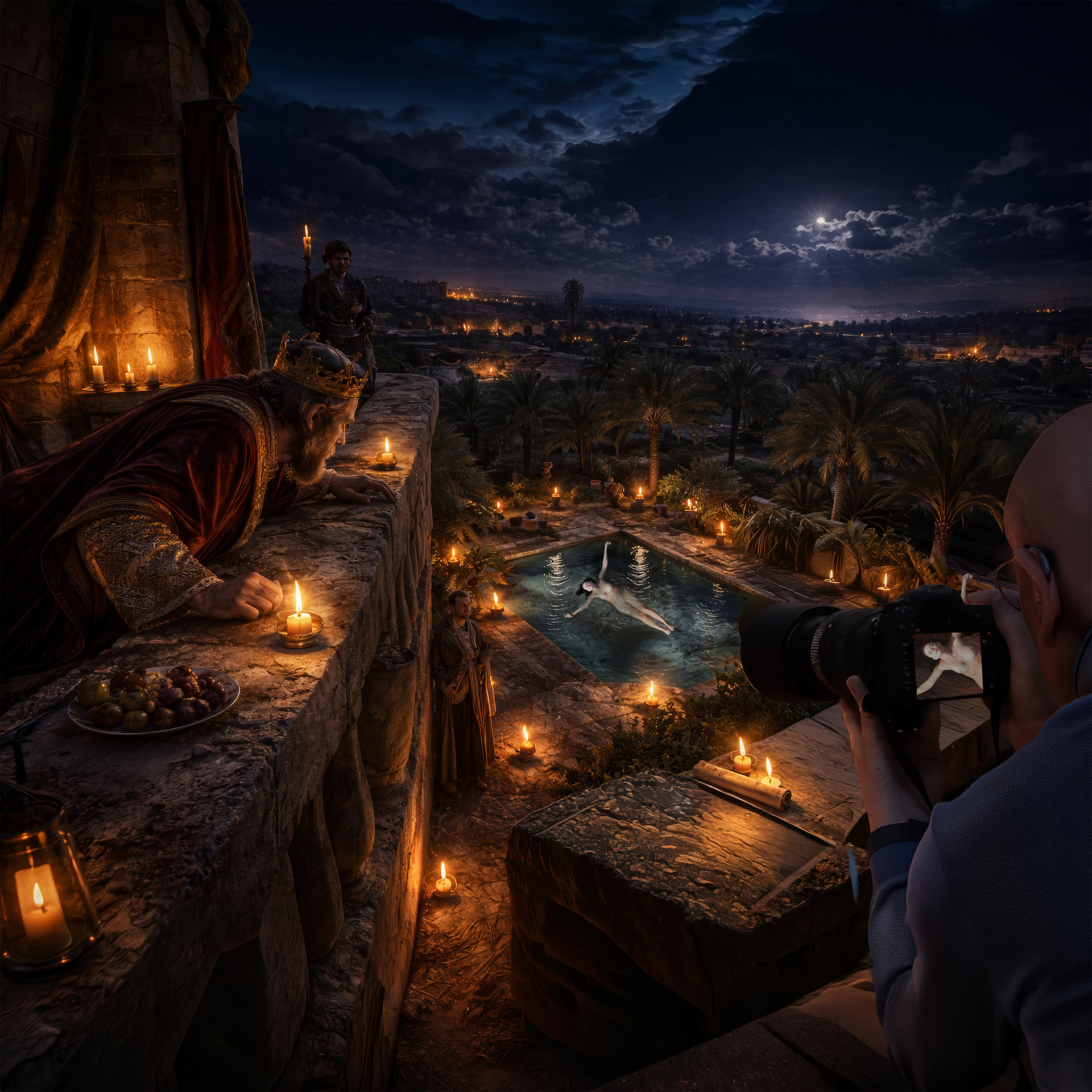
I had no intention of becoming the royal paparazzi of ancient Jerusalem, yet there I was, hiding in the shadows with my camera while King David leaned dangerously over the balcony, completely captivated by the woman bathing below. The entire palace seemed suspended in silence except for the flickering candles and distant sounds of the sleeping city. David’s expression was not merely desire; it carried the reckless certainty of a man accustomed to taking whatever he wanted. Photographing the scene felt strangely uncomfortable, as though I were documenting the exact moment private temptation would transform into public tragedy. Some historical catastrophes, I realized, begin not on battlefields, but beside moonlit pools.