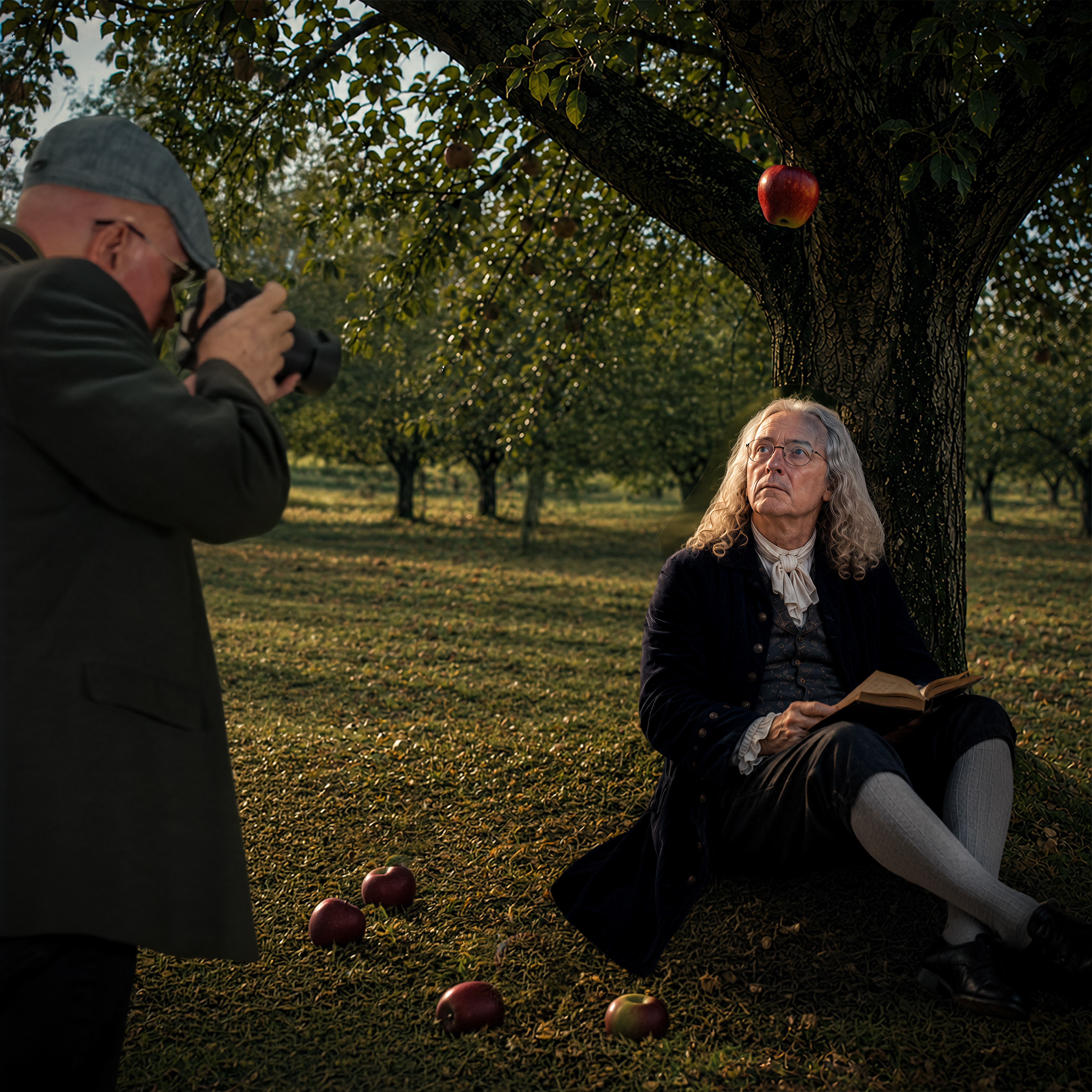
I expected brilliance to arrive with thunder. Instead, I found Newton sitting quietly beneath an apple tree, lost in thought while several fallen apples rested unnoticed around him. I raised my camera just as another apple detached itself from a branch above his head. Neither of us realized what was about to happen. A split second later, the apple struck him directly, and his expression changed instantly — not from pain, but from revelation. It was as though an invisible mechanism of the universe had suddenly exposed itself before his eyes. I understood then that history sometimes changes not during grand ceremonies, but in the brief moment after the fifth apple falls.