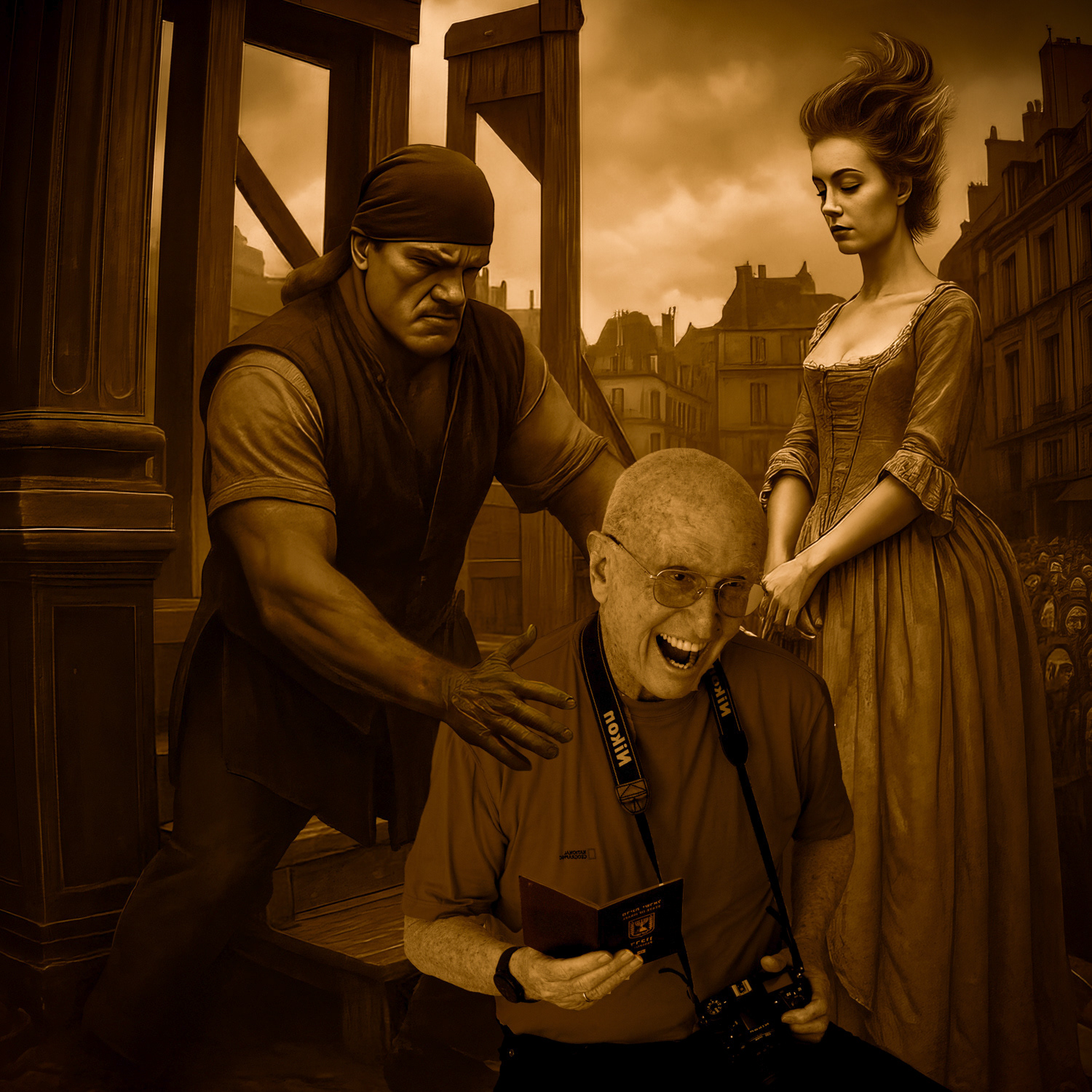
I arrived in revolutionary Paris expecting rage and chaos, but what I found near the guillotine was something far more unsettling: routine. Beside me stood Marie-Antoinette herself, pale yet strangely composed, waiting for her execution with an exhausted dignity that history books never fully capture. Somehow, through a catastrophic misunderstanding, I had also been dragged onto the scaffold. In panic, I pulled out my modern passport, desperately trying to prove to the guards that I did not belong there, that I was not part of their revolution or their enemies. They stared at the document with complete incomprehension. The executioner merely tightened his grip on my shoulder while the crowd waited impatiently for another blade to fall.