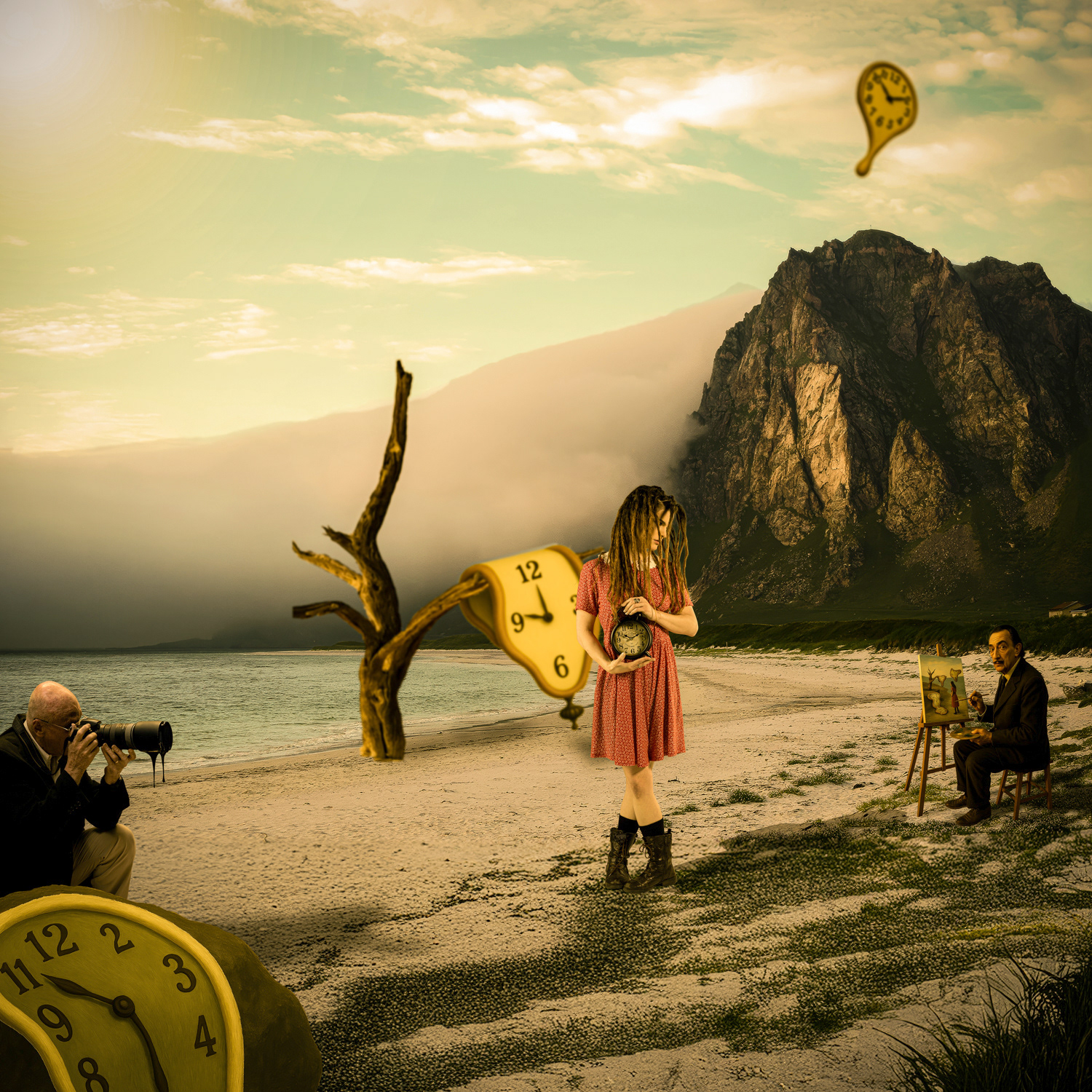
I arrived on the strange beach expecting to meet Dalí the painter, but it felt more as though I had entered Dalí’s subconscious. Melting clocks hung in the air and dripped from impossible places while a young woman wandered silently through the dreamlike landscape carrying time itself in her hands. Dalí barely seemed surprised by any of it. He sat calmly beside his easel, painting the absurdity around him as though recording ordinary reality. Then I noticed something horrifying: the front glass of my camera lens had begun to soften and bend downward like melting wax. Even the instrument through which I observed the world was surrendering to Dalí’s madness. In that place, reality itself refused to remain solid.